

本站推荐电影
-
·伊利股份拟最多回购20亿元 全部注销!陈发树加仓
·《坊巷百年 英雄丰碑》新书发布 福州英雄故事有了全新打开方式
·美媒:3名以色列人举报以军虐待巴人囚犯,有人被铁链捆伤不得不截肢
·1 in 5 Mothers Report Mistreatment in Maternity Care
·SL, 53 countries need debt relief
·Biden calls Truss’s tax cut plans ‘mistake'’
·崇德科技:终止收购德企Levicron GmbH100%股权,崇德科技:终止收购德企Levicron GmbH100%股权
·阿森纳的终极拼图:8000万欧+约克雷斯交换阿尔瓦雷斯,给超高薪
·346人因涉嫌诈骗或充当钱骡被警方调查
·新宾:榛果金秋盈枝笑 百姓共绘致富谣
·The Supreme Court orders makers of gun parts to comply with rules on ghost guns
·C919 completes first scheduled international commercial service
·iOS 15.7与iOS 16同步推送:包含重要安全漏洞修复_系统_用户
·美军重返菲律宾,菲渔民:美军来了,中国就有顾忌不敢再咄咄逼人,刘朝勋教授,原创 美军重返菲律宾,菲渔民:美军来了,中国就有顾忌不敢再咄咄逼人
·김민석, 이 대통령에 "인요한 적십자사 회장 임명 안 했으면"...인준 재고 요청
本站推荐电视剧
-
·让城市展示馆成为展现城市魅力与活力的靓丽名片
·【芸能 覆面座談会】米倉涼子 不起訴も難しい地上波復帰
·Sandis Compound में डीजे साउंड के साथ कर सकेंगे Rain Water Dance, भागलपुर में खुलेगा Top Water Park और चिड़ियाघर
·11年膨胀了575倍,手机APP安装包为什么越来越大?_大小_体积
·明珠公园新增一处童趣空间 点亮市民幸福生活
·奇異誓「奏」響凱歌
·国家发展改革委安排5000万元 支持广西台风灾后应急恢复
·果不出中方所料,高市被批惨了,日本不反思,反手关闭大连办事处,卞穆川,原创 果不出中方所料,高市被批惨了,日本不反思,反手关闭大连办事处
·XMG 推出 NEO 16(M26)游戏本:可选 OLED 屏幕、酷睿 Ultra 9 290HX Plus 处理器
·打击犯罪:奥克兰警方连夜出动,突击检查94个加油站
·Shams:哈登3年9700万续约骑士 合同包含球员选项及15%交易保证金
·中超罕见一幕!领头羊主场遭狂嘘,四万人集体倒戈,约翰脸色铁青
·西藏昌都清洁能源推介会签约7.65亿元,西藏昌都清洁能源推介会签约7.65亿元
·本田发布2024款Prologue EV新细节:将比最大的CR-V还要大
·新赛季CBA10月10日开赛 推动第二阶段恢复主客场
电影下载排行
-
·国足踢喀麦隆三大看点不容错过!门将位置出现新面孔,王钰栋爆发
·【仓单】8月26日上期所沪铜期货仓单较上一日下降4028吨
·樱花厨具长期陪伴三餐日常,推出樱花燃气灶S630G守护厨房时光
·国家发展改革委部署加快今年新型政策性金融工具投放
·科幻新作《大迁离》公布全新预告 定档2027.4.27
·पंजाब में बाढ़ से हाहाकार, अमृतसर में बनीं चौकियों में फंसे 360 बीएसएफ जवान; रेस्क्यू ऑपरेशन तेज करने की मांग
·警方核查地震造谣信息数量多达数百条 AI时代如何应对造假
·杭州银行暴力催收。引导借新还旧
·高通CEO:大众意识到芯片的重要性 芯片行业仍值得看好
·林书豪、郭士强一人带一队?中国男篮重启姚明旧政,或许真能重新崛起!
·三七互娱:上半年净利润同比增长26.14% 拟10派1元
·2026年杭州婚恋旅游推广活动甜蜜启动
·国台办赞赏马来西亚一中原则立场
·苹果 iPhone 14/Pro 系列官方维修价出炉,背面玻璃最贵 3998 元_电池_相机
·综艺股份:海安瑞海已减持0.96%股份
电视剧下载排行
-
·长江存储IPO幕后:武汉20多年前押注芯片行业,是复制“合肥模式”?
·9月13日0时至14时 西藏新增1例确诊病例和71例无症状感染者
·俄联邦安全局逮捕一名男子,其涉嫌为乌方收集俄军事设施相关信息
·赵心童遭4连鞭!无缘决赛
·高金价推动黄金消费“轻量化”
·Olympic champion Ma Long invites Taiwan youth to visit Chinese mainland
·R Ashwin ने IPL से लिया संन्यास,उधर वाइफ प्रीति हुईं रोमांटिक, जिस अंदाज में ट्रिब्यूट दिया वो हो गया VIRAL
·美媒晒科比MVP赛季:西部第一加联盟总得分王
·业绩高增与重组浪潮共振 “牛市旗手”爆发!板块配置价值显现?(附股)
·苹果宣布:北京时间9月9日凌晨1点召开iPhone 18 Pro/Max发布会
·正式版越来越近!苹果iOS 27 Beta 7发布
·半导体大厂抢着去印度!英飞凌收购印芯片公司C2i:陈立武是早期投资人
·Cloudflare 称 AI 智能体已占 60% 互联网流量,同比激增 1700%
·泰国总理接到诈骗电话:骗子用AI冒充外国领导人来电,还发来“捐款”链接
·文脉华章 | 总书记引经据典话廉政(三)
断背山
-
发布时间:2026-08-26
玻钻之争
Inside Asia’s oldest private library, guarding ancient scrolls in the age of AI_我的网站

A |
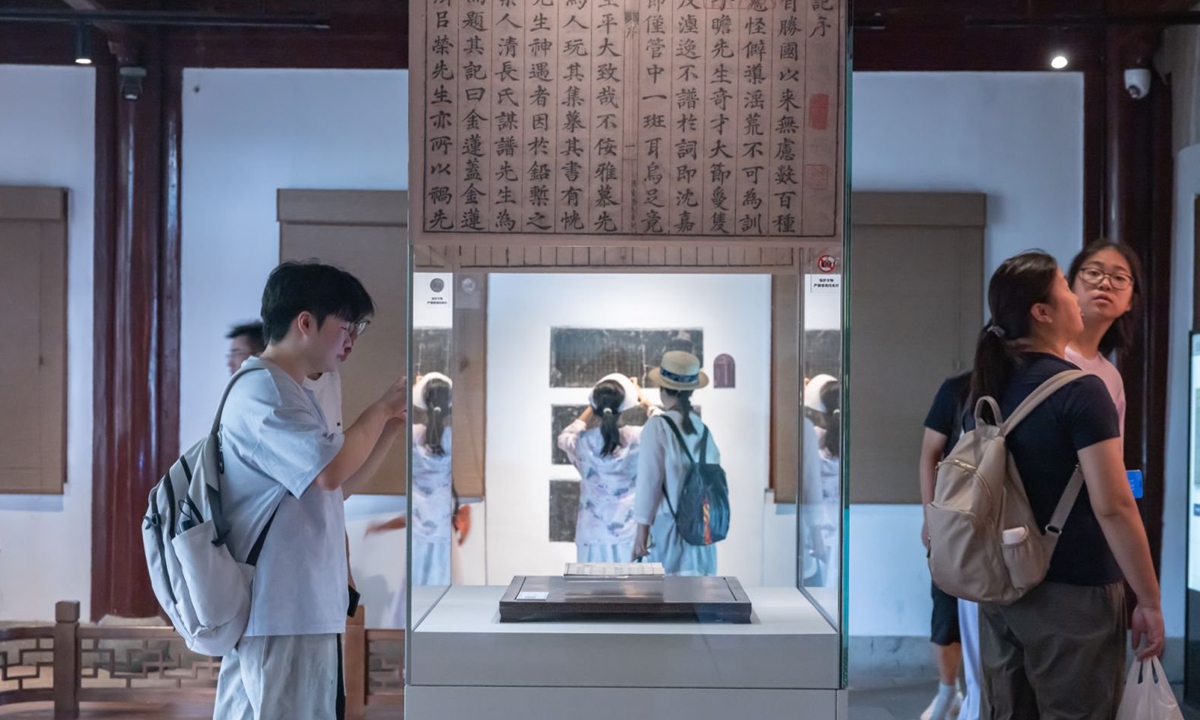
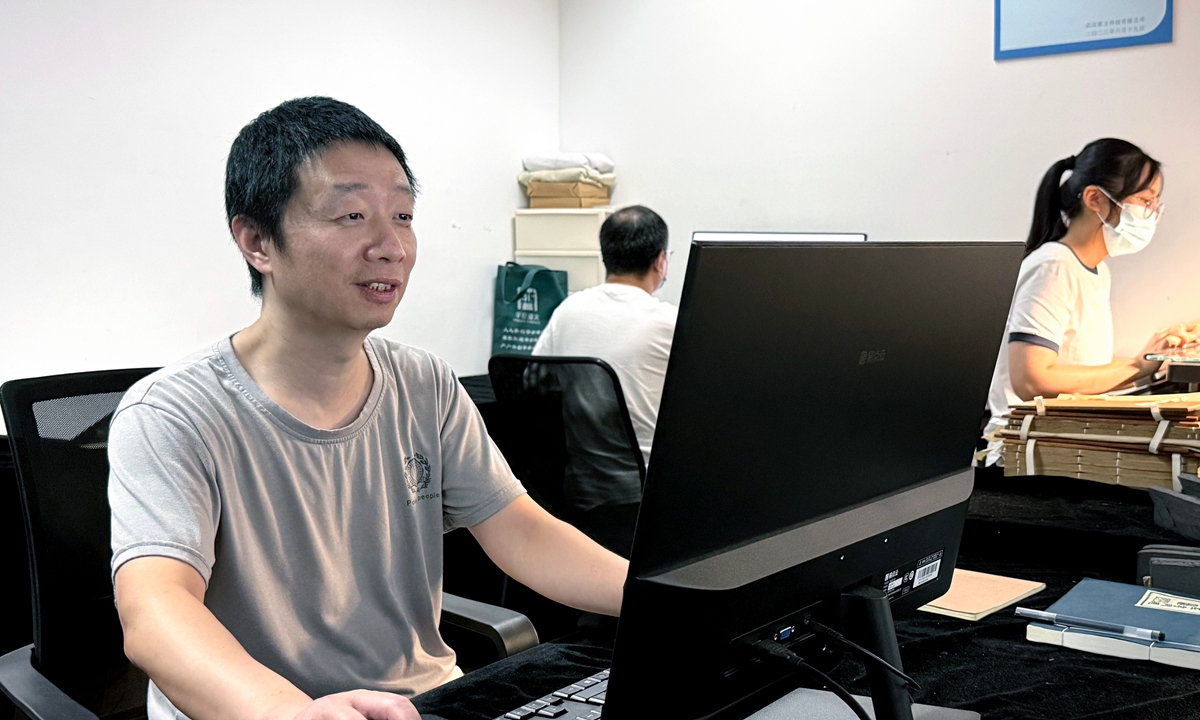
Huang Gang is in his fifties. Every day, he sits before a computer screen at Tianyige Museum (Tianyige), flipping through ancient books - digitally.
As director of the information technology department at Tianyige Museum in Ningbo, East China's Zhejiang Province, home to Asia's oldest surviving private library and one of the world's three oldest remaining family-run libraries, his job title may seem far removed from old books. Yet his work centers on them: converting brittle, thread-bound antique volumes into searchable, zoomable digital files accessible on screen.
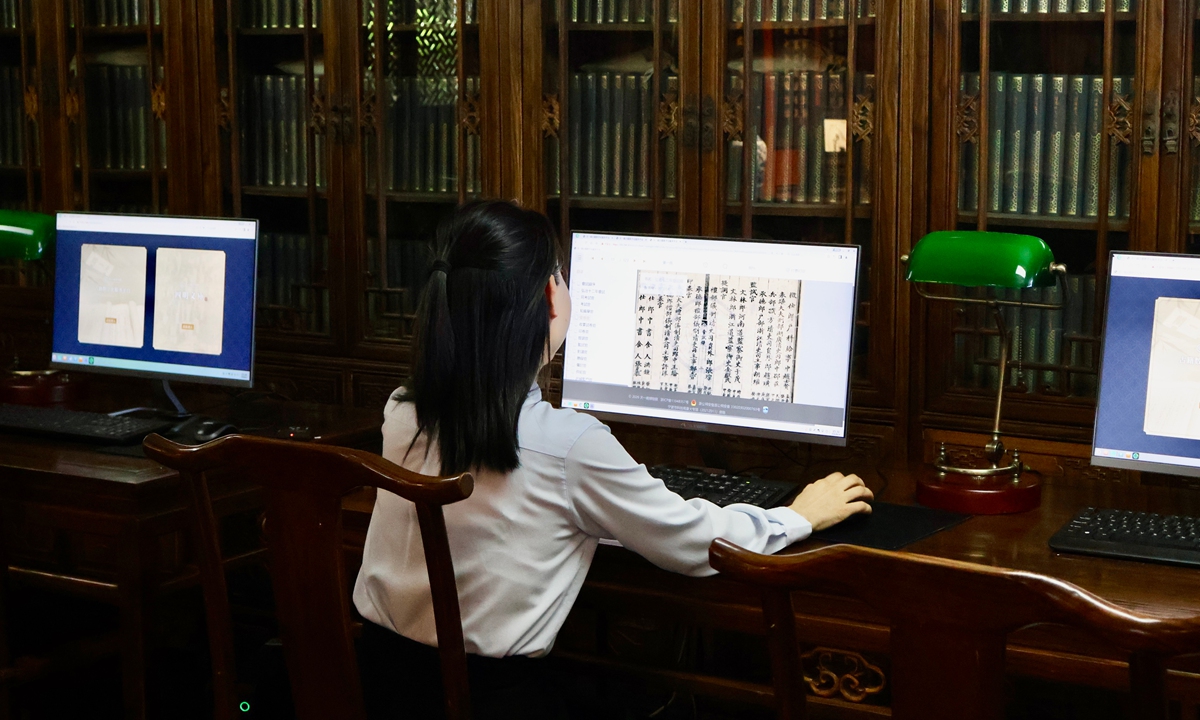
For years, Tianyige has carried out digitization in batches guided by its mission: rescue-oriented preservation, scholarly organization and public-oriented outreach. Its teams have scanned more than 3.4 million pages of ancient texts. The institution rolled out its Ancient‑Book Digital Service Platform back in 2009. By 2025, the platform had drawn over 4.6 million total visits.
To outsiders, this might look like a headlong rush into digitization. For Huang and his colleagues, it is delicate work balanced between fast‑evolving artificial intelligence models and the reverence owed to fragile paper relics. "Technology is a tool, ancient books are artifacts, and reading is the ultimate purpose," Huang told the Global Times.
Beyond tech boundaries
Deep in the storage vaults of Tianyige, tens of thousands of ancient volumes rest in silence. Some pages are curled and fragile; others bear faded script -the accumulated marks of centuries. Vulnerable to aging, wear and external damage, these precious paper relics can hardly sustain long-term repeated manual consultation, making digital preservation an indispensable way to inherit ancient book resources.
Huang's daily work involves leading his team in the digitization of the library's entire collection of ancient books, paintings and cultural relics, bringing rare treasures out of the shadows and into public view.
AI now serves as a core auxiliary tool for ancient-book digitization and research. Huang's group initially built character-recognition frameworks based on optical-character-recognition technology. By cross-checking outputs across different models, ancient Chinese characters, damaged script and blurry handwriting.
According to Zhejiang Daily, by August 2025, the Tianyige's digital platform had added over 3,700 new digitized book sets, lifting its total digital holdings past 20,000 volumes.
Digitization is never a purely technical exercise; in-depth scholarly expertise in ancient texts remains indispensable. Huang frequently collaborates with Zhao Xuteng, a museum librarian specializing in classical literature. Zhao is responsible for selecting which volumes to digitize, evaluating editions, studying content, and identifying works of significant academic or public value. While one team focuses on the technical execution, another digs deep into the textual substance, ensuring that cold digital capture remains faithful to the historical and bibliographic logic of the originals.
Staying true to reading
When he is not writing code, Huang keeps asking one fundamental question: What should technology actually do for people? "All technology ultimately serves the act of reading itself," he said. "It can never replace that."
With the rapid rise of large language models, demand for high-quality text corpora has surged. Overseas, some AI companies have reportedly purchased millions of printed books in bulk, scanned them and then shredded the originals.
"Machines can efficiently compile documents, retrieve sources and generate explanatory notes. Real engagement with ancient texts, however, is far more than mechanical assembly of characters," Huang noted.
Both Huang and Zhao stressed that human beings sit at the heart of cultural inheritance. People absorb wisdom from old texts, draw on personal experience and scholarship to reflect, and produce new knowledge - an intellectual process no AI can fully replicate.
The Global Times learned that every digitization workflow at Tianyige follows strict closed-loop protocols: collection checkout logging, noncontact scanning, AI-powered quality checks, precise image stitching and compliant online publication. The full procedure minimizes physical wear on original artifacts.
"A book is, first and foremost, a cultural relic that carries a thousand-year legacy," Huang said. "Only secondarily is it a text to be read." That principle, he added, is shared by all guardians at Tianyige.
"Media change, technologies evolve, but the essence of reading has never changed," he stressed.
Today, drawing on its comprehensive digital collections, Tianyige hosts monthly exhibitions of rare texts and organizes family reading events where parents and children explore the classics together. For Huang and his colleagues, the most gratifying reward is watching more and more ordinary people develop a love for ancient reading and a deeper appreciation for the traditional Chinese culture.
In an era swept by artificial intelligence, Tianyige's guardians tend to fragile paper relics while leveraging modern technology, preserving the genuine power of reading. More than 450 years of scholarly heritage flows onward, passing between human fingertips and glowing digital screens.
。 사당동 305-35 일대 재개발 신통기획 확정청소년수련시설 등 맞춤시설로 생활환경 개선 사당동 305-35 지역 정비사업 후 예상 이미지. [서울시][헤럴드경제=김희량 기자] 서울시 동작구 사당동 305-35 일대가 재개발 신속통합기획을 통해 최고 34층, 약 970세대 규모의 주거단지로 탈바꿈한다. 시는 교통 수요 대응을 위해 사당로16길을 단계적으로 폭 16m·4차로까지 확폭하고 생활기반시설을 배치하기로 했다.26일 서울시는 동작구 사당동 305-35 일대 재개발 신속통합기획을 확정했다고 밝혔다. 대상지는 용도지역을 상향(제2종 일반주거지역→제3종일반주거지역)하고 사업성 보정계수(1.17)을 적용 받아 약 970세대의 단지 계획이 가능하게 됐다.해당 지역은 지하철 7호선 남성역 도보 10분 거리에 있다. 시는 남북으로 430m에 이르는 장방형 대지 형상과 최대 22m의 높이차가 있어 경사 지형인 탓에 이를 고려한 단지계획을 검토했다.시 관계자는 “대상지 일대인 사당로16길을 중심으로 역세권 활성화사업, 역세권 장기전세주택사업 등이 추진되고 있어 향후 교통량 증가 등 지역 여건 변화가 예상된다”면서 “대상지는 장래 교통수요 대응과 지역의 도로·보행체계 개선도 필요한 상황”이라고 설명했다. 사당동 305-35일대 위치도. [서울시]이에 시는 ▷주변 개발사업과 연계한 단계적 도로체계 정비 ▷주민 생활동선 고려한 보행·외부공간 조성 ▷가로 특성을 고려한 맞춤형 시설배치 ▷주변 지역과 조화로운 경관창출 ▷지역 맞춤형 인센티브 적용을 중심으로 기획을 진행했다.도로의 경우 북측 역세권활성화사업과 연계해 우선 폭 14m의 3차로와 양측 보도를 확보하고, 향후 서측 역세권 장기전세주택사업 등 추진을 통해 진입부를 폭 16m, 4차로까지 넓힌다.또 남북으로 긴 장방형 대지(430m×90m)와 주민 보행동선을 고려해 동서방향 공공보행통로를 조성하기로 했다. 동측 주거지쪽 급격한 단차(8~9m)로 인한 옹벽구간은 계단식 조경공간 조성으로 시각적 위압감을 완화하고 급경사 계단은 안전하게 재조성하면서 엘리베이터를 설치해 보행 편의성과 안전성을 갖추도록 한다.기존 협소한 사당4동 구립 청소년독서실은 확대·재배치하여 청소년수련시설로 바꾼다. 대상지 북측 진입부에는 최고 34층을 계획하고 남측 저층주거지 및 남성중학교 방향으로 점차 낮아지도록 계획해 주변과 조화를 이루는 스카이라인이 형성될 예정이다.김창규 서울시 도시공간본부장은 “대상지 일대는 다양한 개발사업이 추진되고 있어 지역 일대 변화를 종합적으로 고려한 도로·보행체계 정비가 필요한 곳”이라며 “지역 생활가로를 중심으로 기반시설을 정비하고 생활동선을 연계해 지역 변화를 이끄는 주거단지가 조성될 수 있도록 지원하겠다”고 했다.。
Current article:http://owdew.fanfutaopoulaxiong.pics/ko84qt/20260826/4071.html
Published on:01:22:51
下载地址2:点击进入迅雷高速下载 温馨提示:邀请好友一起下,可提高下载速度,若遇无法下载,可另选时间尝试或重装软件!
下载方法:安装软件后,点击即可下载,谢谢大家支持,欢迎每天来!